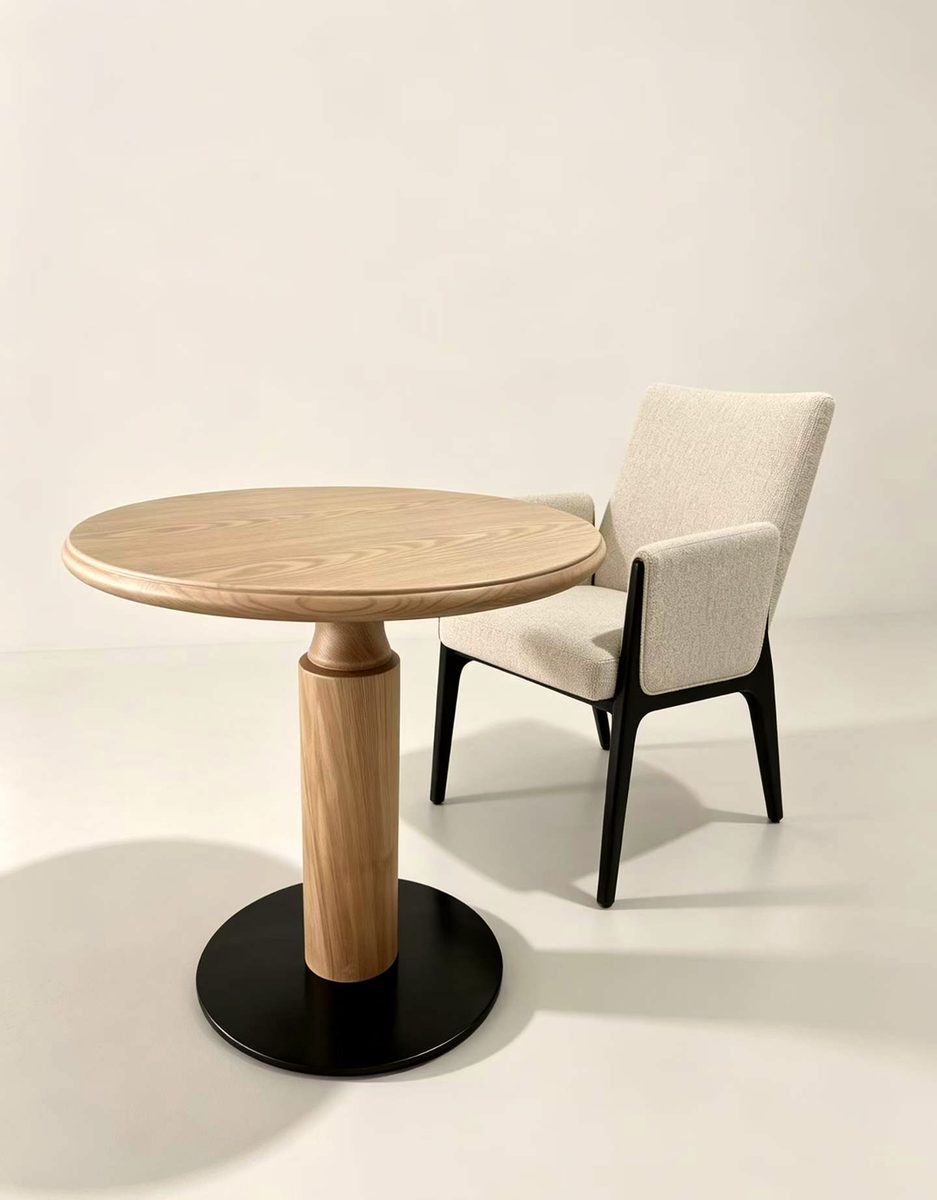
A hotel dining room earns its keep every single service. Chairs are pulled out and pushed back hundreds of times a week, tables are wiped down between covers, and lounge chairs in the waiting area take the weight of guests who arrive early and stay late. The short answer to furnishing a dining room that lasts is this: choose seating and tables as a system, not as individual pieces. Match the chair to the table it will sit at, match both to the way your room actually operates, and confirm every specification — dimensions, materials, finish and weight capacity — for each model before you order, because a chair that looks right in a photograph can still be wrong for your floor, your table height or your guests.
This guide walks through the decisions in the order a buyer should make them. It is written for hotel, restaurant and catering buyers who are furnishing a dining room, a breakfast area or a lounge corner for the first time, or refreshing a room that is no longer working. Where a specification matters, the guide tells you what to ask for rather than giving you a number, because the right number depends on your room, your tables and your service style. Laiwen HORECA’s Hospitality Furniture range is organised the same way: dining chairs, bar stools, banquet chairs, a lounge chair with ottoman, and dining tables and sets, listed as models F01–F10, with colour and form shown in the product photos and every specification confirmed per model on enquiry.
1. Start with the room, not the catalogue
Before you look at a single chair, measure the room and sketch how it will be used. A dining room that serves breakfast, lunch and dinner has different needs from a banquet hall that is reset for weddings at the weekend, and both differ from a lobby lounge where guests sit with a drink and wait.
- Measure the floor area and mark the fixed points: doors, service doors, columns, buffet stations and the route staff take from the kitchen.
- Decide how many covers the room must hold at peak service, and how many of those covers sit at the same time.
- Work out the table mix: how many tables for two, four and six, and whether any tables need to join together for larger parties.
- Check the floor surface. A chair that slides easily on tile can drag and mark timber, and a chair that is stable on carpet may rock on a hard floor.
- Note the light. Dark upholstery shows dust and crumbs; pale finishes show stains. Neither is wrong, but each changes your cleaning routine.
- Think about storage. If the room is reset often, chairs that stack or fold save hours. If it never changes, a heavier, more comfortable chair may be the better choice.
- Plan the guest journey. Where do guests wait, where do they leave coats and bags, and where does a lounge chair actually help rather than take up space?
A buyer who skips this step usually ends up with furniture that fits the catalogue and not the room. Ten minutes with a tape measure and a floor sketch will save you from the most common mistake in hotel furnishing: ordering beautiful chairs that leave no room for service.
2. Match the chair to the table
A dining chair and a dining table are one working unit. The seat height must leave comfortable legroom under the table, the chair back must clear the table edge when it is pushed in, and the chair must be easy to pull out without scraping the floor or the table leg.
- Confirm the seat height and the table height for the exact models you are pairing, and ask for both in writing.
- Check the chair’s overall width against the space each guest gets at the table. A chair that is too wide forces guests to sit sideways; one that is too narrow feels cheap.
- Look at the backrest. A high back suits a formal dining room and a long meal. A low back suits a breakfast room where guests come and go quickly.
- Test the armrests, if any. Arms make a chair more comfortable for a long dinner and harder to tuck under a table. In a tight room, armless chairs usually work better.
- Consider the table shape. Round tables forgive a slightly wider chair; rectangular tables punish it.
- Ask how the chair behaves when pushed in. Does the backrest hit the table edge? Does the seat slide fully under the apron?
- If you are buying a set — table and chairs together — ask whether the set was designed as a set or assembled from separate models, and confirm the pairing in writing.
Laiwen HORECA lists dining tables and sets alongside dining chairs in the Hospitality Furniture range, so a buyer can enquire about a matched set rather than assembling one from unrelated pieces. When you enquire, name the table model and the chair model together and ask for the paired measurements to be confirmed.
3. Choose the right chair for each zone
One dining room usually contains several zones, and each zone deserves its own seating.
- Main dining floor: the workhorse chair. It needs to be comfortable for a full meal, easy to clean, and strong enough for daily use. Comfort matters here more than anywhere else, because a guest who is uncomfortable does not order dessert.
- Breakfast area: guests move quickly and tables turn over fast. A lighter chair that is easy to pull out and wipe down is usually the better choice.
- Banquet and function rooms: chairs are stored, moved and reset constantly. Stackability, a manageable weight and a finish that survives handling matter more than deep comfort, because the sitting time is shorter. See the companion guide on how to choose banquet chairs for the full checklist.
- Bar and counter seating: bar stools are a different product from dining chairs, with their own height and footrest requirements. See how to choose bar stools for a hotel or restaurant before ordering stools for a counter.
- Lounge and waiting areas: this is where the lounge chair and ottoman belong. A guest waiting for a table, a traveller with a coffee, or a couple finishing a drink after dinner all need a seat that invites them to settle, not to hurry. The lounge chair in the Laiwen HORECA range is listed with its ottoman, so enquire about the pair together.
Buying one chair style for every zone is simpler, but it is rarely better. A room furnished in zones feels considered, and each zone’s furniture lasts longer because it is doing the job it was chosen for.
4. What to check before you order: the comparison table
Use this table when you are comparing models. It lists the checks that matter most for dining furniture, and what a good answer looks like. Every specification in it should be confirmed per model on enquiry — never assume a dimension, material or weight capacity from a photograph.
| Check | What to ask | Why it matters |
|---|---|---|
| Seat height and table height | Confirmed measurements for the exact chair and table models | Legroom and comfort depend on the pairing, not on either piece alone |
| Overall width and depth | Confirmed measurements, including armrests | Decides how many guests fit at each table |
| Weight capacity | Confirmed per model | A chair that is overloaded will fail early, and the failure is usually visible |
| Frame and seat construction | Material and construction, confirmed per model | Decides durability, repairability and cleaning |
| Finish and colour | Colour and finish as shown, confirmed per model | Colour varies between batches; confirm before ordering |
| Floor protection | Glides or feet supplied, and spares available | Protects your floor and stops chairs from marking it |
| Stacking or folding | Whether the model stacks, and how many high | Decides storage space and reset time |
| Cleaning | Recommended cleaning method for the finish | A finish you cannot clean will look tired within months |
| Spare parts | Whether glides, feet and fixings are available | Small parts wear out first; spares keep chairs in service |
| Packing | How each piece is packed for shipping | Dining furniture is bulky; packing decides freight cost and damage risk |
If a supplier cannot answer a row of this table for the model you want, that is useful information. It tells you to ask again, to request a sample, or to choose a model whose specification is fully confirmed.
5. Colour and form: what the photos can and cannot tell you
Product photos are genuinely useful for dining furniture. They show the form of a chair — the shape of the back, the line of the legs, the proportions of a table — and they show colour. The Laiwen HORECA Hospitality Furniture range (models F01–F10) is presented on colour and form: dining chairs, bar stools, banquet chairs, a lounge chair with ottoman, and dining tables and sets, each shown as it looks.
What a photo cannot tell you is the material, the dimensions or the weight capacity. Two chairs that look identical in a photograph can be built very differently, and a colour that looks warm on screen can read differently under your room’s lighting. That is why every specification for these models is confirmed per model on enquiry, and why a buyer should treat the photo as the starting point of the conversation, not the end of it.
When you enquire, describe the room the furniture is going into: the floor, the lighting, the table it will sit at, and the service it will see. A sourcing partner who knows the context can confirm whether a model suits it, or steer you to one that does. If colour is critical — for example, matching existing chairs — ask whether a physical sample or a fabric swatch can be supplied before a bulk order is placed.
6. Durability: the questions that predict lifespan
A dining chair’s lifespan is decided less by how it looks on day one than by how it is built and how it is used. These are the questions that predict whether a chair lasts two years or ten.
- How is the frame joined? Ask about the construction method, not just the material name.
- Where does it wear first? Ask which part of the chair is most likely to need attention, and whether that part can be replaced.
- How is the seat fixed to the frame? A seat that can be re-fixed is a chair that can be repaired.
- What happens if a guest spills coffee, wine or sauce? Ask for the cleaning guidance for the exact finish.
- How heavy is the chair to move? Staff move these chairs every day. A chair that is too heavy slows service; one that is too light slides around.
- Does the chair survive being stacked, if it stacks? Ask how many high it stacks and whether the finish marks when stacked.
- What is the warranty position? Ask what is covered and for how long, and get it in writing. Do not assume a warranty exists — confirm it.
None of these questions has a single right answer. A heavy chair is right for a formal dining room and wrong for a banquet hall that resets daily. The point of asking is to match the chair to your operation, not to find a chair that scores perfectly on every line.
7. Ordering as a programme, not a single purchase
Most hotel buyers do not furnish a dining room once and never think about it again. Chairs break, rooms expand, a second property opens, and the same model is needed again six months later. Ordering as a programme — one consistent range, ordered in stages — is usually cheaper and always looks better than buying whatever is available each time.
- Choose the range first, then the quantities. Decide which models cover your dining floor, banquet room, bar and lounge, and keep that list stable.
- Order a trial quantity first if you can. A small first order lets you test the chairs in real service before committing to the full room.
- Keep a record of the model numbers, colours and finishes you ordered, so a repeat order matches.
- Ask about spare glides, feet and fixings at the same time as the main order. They are cheap when ordered together and hard to source later.
- Plan the delivery around your operations. Dining furniture is bulky; a delivery that arrives during a busy service is a problem.
- If you run more than one property, ask whether the same models can be supplied across properties so the look stays consistent.
The companion guide on building a hotel tableware programme in one order applies the same thinking to tableware, and the principle is identical: consistency across orders is worth more than a small saving on a one-off purchase.
What to include in your enquiry
A clear enquiry gets a faster, more accurate quotation. Copy this checklist into your email or WhatsApp message and fill in every line you can. Anything you cannot fill in is itself useful information — it tells the supplier what to ask you.
- Room and use: dining room, breakfast area, banquet hall or lounge; how many covers at peak; how the room is reset.
- Models: the model numbers you are interested in (for example, from the F01–F10 Hospitality Furniture range), or a description of the colour and form you need.
- Table pairing: the table model and height each chair will sit at, or the table you already own and its measurements.
- Quantities: how many of each model, and whether this is a first order or a repeat.
- Colour and finish: the colour you want, and whether it must match existing furniture.
- Floor type: tile, timber, carpet or stone, so floor protection can be confirmed.
- Specifications to confirm: seat height, overall width and depth, weight capacity, materials and construction, cleaning guidance.
- Samples: whether you need a sample or swatch before ordering, and where it should be sent.
- Packing: how the furniture should be packed for shipping.
- Destination: delivery city and country, and whether delivery is to a hotel, a warehouse or a port.
- Timeline: when you need the furniture, and whether the date is fixed.
- Customisation: any customisation you need, such as a specific colour, logo or upholstery, described as a question, not an assumption.
Send your enquiry to Laiwen HORECA by email at [email protected] or by WhatsApp on +86 189 9829 7649 (backup +86 134 1816 4320). A sourcing partner works from your enquiry, so the more complete it is, the more accurate the reply will be.
Frequently asked questions
How many dining chairs do I need for my restaurant?
Start from covers, not from tables. Decide how many guests sit at peak service, then work out the table mix that holds them. A table for four needs four chairs, but a room of ten four-tops and two two-tops needs forty-four chairs, plus a few spares. Order spares — chairs go out of service for repair, and a missing chair at a table for four is visible to every guest.
Should all my dining chairs be the same model?
Not necessarily. The main dining floor, the breakfast area, the banquet room and the lounge each have different needs, and using one model everywhere is a compromise. What should be consistent is the overall look: similar colour, similar form language, similar quality. A room furnished in zones with a consistent palette looks deliberate; a room with one chair everywhere can look like a canteen.
Can I mix dining chairs with lounge chairs in the same room?
Yes, and in many hotels it is the right choice. Lounge chairs belong where guests wait, relax or finish a drink — near the entrance, beside a window, or in a corner that would otherwise be wasted. They do not belong at a dining table. Keep the two functions separate and the room works better.
How do I know if a chair will fit my tables?
Confirm the seat height and the table height for the exact models, in writing, and check the chair’s width against the space per guest. If you already own the tables, send their measurements with your enquiry and ask for the pairing to be confirmed. Never rely on a photograph to judge fit.
What should I ask about before ordering dining furniture?
Seat height, overall width and depth, weight capacity, materials and construction, finish and colour, floor protection, stacking, cleaning guidance, spare parts and packing. If any of those cannot be confirmed for a model, ask for a sample or choose a model whose specification is fully confirmed.
Do I need a sample before a bulk order?
For a first order, a sample is usually worth it. It lets you check the colour under your own lighting, sit in the chair, test it against your tables and see how it handles your floor. Ask whether a sample can be supplied, what it costs and how long it takes, and treat the sample as part of the order process rather than an extra.
How do I keep dining chairs looking good for years?
Clean them the way the finish requires, not the way that is quickest. Replace glides and feet before they wear through to the frame. Tighten fixings when they loosen rather than waiting for a wobble. Keep spares in stock. And order the same model again when you expand, so the room stays consistent instead of drifting into a mix of near-matches.
A final word
A dining room that lasts is not furnished by choosing the prettiest chair in a catalogue. It is furnished by measuring the room, matching chairs to tables, choosing the right seat for each zone, confirming every specification in writing, and ordering as a programme you can repeat. Do that, and the furniture disappears into the background — which is exactly where good dining furniture belongs, leaving guests to notice the food, the service and the room itself.
Laiwen HORECA is a sourcing partner for hotel, restaurant and catering buyers: the Hospitality Furniture range — dining chairs, bar stools, banquet chairs, a lounge chair with ottoman, and dining tables and sets, models F01–F10 — is supplied on a quote-first, enquiry-led basis, with colour and form shown in the product photos and specifications confirmed per model on enquiry. To start an enquiry, email [email protected] or message on WhatsApp at +86 189 9829 7649 (backup +86 134 1816 4320), and include the room, the models, the table pairing, the quantities and the destination using the checklist above. For the full list of categories, see Hospitality Furniture, and for help structuring the enquiry itself, see The Hotel Supplies RFQ Checklist.