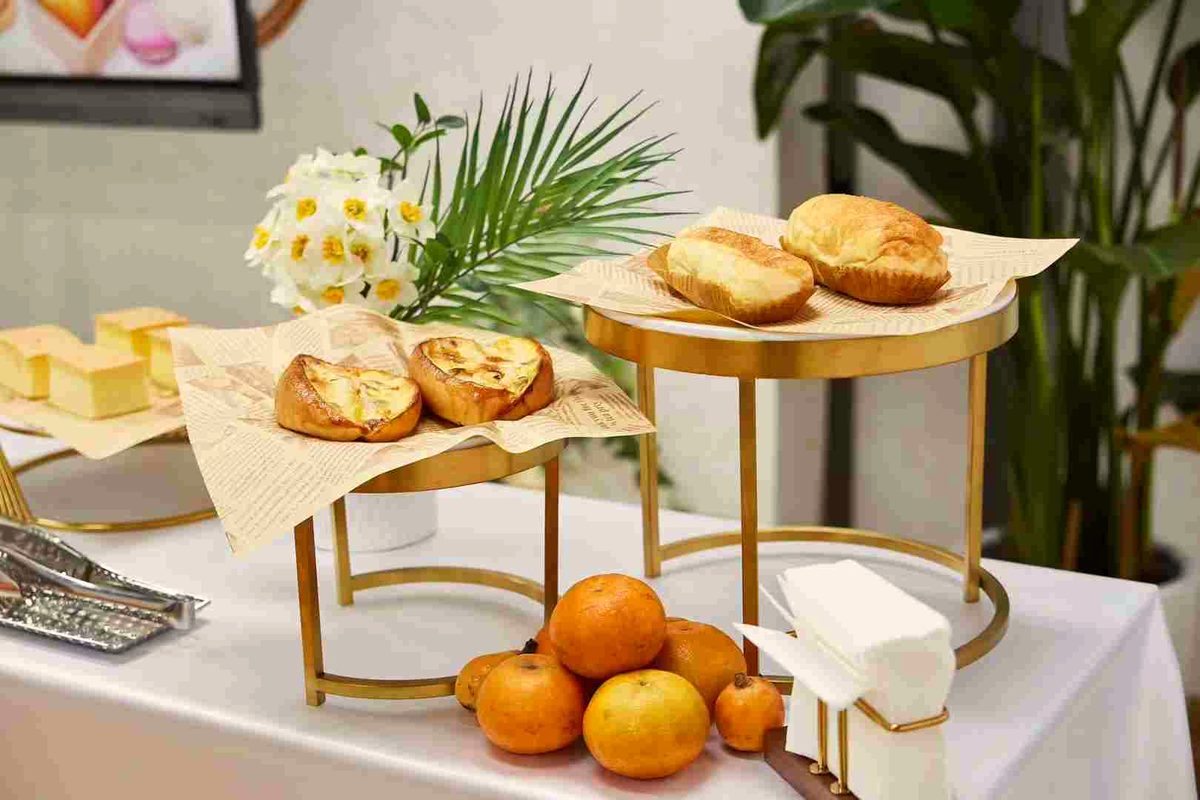
A buffet riser is a raised platform that lifts a dish, platter, or bowl above the table surface so guests can see it, reach it, and serve themselves without crowding the line. Used well, risers turn a flat row of trays into a layered display that looks generous, keeps service moving, and makes the whole room feel considered. Used badly, they wobble, block sightlines, or leave cold food sitting at the wrong height. This guide gives you seven practical ways to build a buffet with risers and display stands, so your next breakfast service, conference lunch, or banquet reads as professional from the first guest to the last.
1. Start with the line, not the riser
Before you choose a single stand, map the guest journey. Where do guests enter the buffet? Where do they pick up a plate? Which dishes get the most traffic, and which ones need a server nearby? A riser only earns its place when it supports that flow. Put your highest-traffic items — bread, salads, the main hot dishes — where guests naturally pause, and use height to draw the eye toward them. Low-traffic items, such as condiments and garnishes, can sit lower and closer to the edge of the table.
Walk the line yourself at service height. Can you see every dish label from a normal standing position? Can a guest reach the back row without leaning across the front? If the answer is no, the problem is usually layout, not the number of stands. Fix the layout first, then choose risers to fit it. This is also the moment to count how many serving positions you actually need, because that number drives how many risers and stands to source — and it is the number your supplier will ask for when you request a quote.
2. Build height in tiers, not in towers
The classic mistake is stacking everything as high as it will go. A buffet that climbs like a staircase looks dramatic in a photograph and exhausting in real life, because guests at the back cannot see what is on the lower levels and servers cannot reach the top row to refill it. The better approach is three gentle tiers: a low level for platters and bowls that guests serve from directly, a middle level for the dishes you want to feature, and one high accent level for a centrepiece or a signature item.
A good rule of thumb is to keep the tallest display no higher than a guest can comfortably reach over — roughly the height of a raised serving dish on a stable stand, not a tower. Keep the back row taller than the front row so every dish stays visible, and leave a clear gap between tiers so a serving spoon or a pair of tongs can move freely. When you plan a tiered layout, note the footprint of each tier as well as its height: a wide, stable base matters more than an extra few centimetres of elevation, especially on a busy line where guests and staff are moving quickly.
3. Match the riser to the food, not the other way round
Different dishes need different support. Heavy chafing dishes need a low, broad, completely stable base and should never sit on a tall, narrow stand. Cold displays — salads, fruit, desserts — work well on a raised platform that lifts them into view and leaves room underneath for a chilled tray or a bed of ice if your operation uses one. Bread and pastries sit best at a moderate height under a warming station, where guests can see the selection and the heat source can do its work; see our guide to heat lamp warming stations for how that pairing works in practice.
Small items need small platforms. A riser that is far wider than the bowl on top of it wastes table space and looks unfinished. A riser that is narrower than the dish is a tipping risk. Before you order, measure the serving dishes the riser has to carry — the diameter of your bowls, the footprint of your chafing dishes, the size of your platters — and confirm that the stands you source fit them. If you are planning a mixed display, a set of risers in two heights gives you far more flexibility than a single height repeated across the table; for example, gold round buffet risers in two heights let you create a low tier and a mid tier from one matching set, which keeps the whole display looking coherent.
4. Keep the display stable, clean, and safe
A buffet is a working surface, not a still life. Guests bump the table, servers swap full trays for empty ones, and a wobbling stand will eventually drop something. Check every riser for a flat, level base and a non-slip contact point before it goes into service. On a linen-covered table, a stand with a narrow foot can sink into the cloth and tilt; test it on the actual table dressing you use, not on a bare countertop.
Cleanliness is part of the display. Crumbs and drips collect at the base of risers and under stands, out of sight, so build a quick wipe-down of every stand into your reset routine between services. Stands that come apart or fold flat are easier to store and to clean thoroughly, which matters when you are turning a room from breakfast to lunch to a banquet in one day. When you enquire about a riser set, ask how it stores, how it cleans, and whether spare pieces can be supplied if one is damaged — a display that is missing one stand from a matched set is hard to dress well.
5. Use risers to control pace and portion flow
Risers are not only decoration; they are a service tool. A raised dish at the start of the line slows guests down for a few seconds while they look, which spreads the queue. A low, wide display of a popular item with two serving utensils speeds it up. If one dish always runs out first, raise it and give it a second position further down the line, so guests who missed it at the start find it again instead of queuing back.
Think about replenishment, too. A server refilling a dish on a high stand needs a clear approach and a spare tray at hand; if the stand blocks access from behind, refills get slow and the display spends more time half-empty. Leave a service gap behind the tallest displays, and keep the back of the buffet accessible. The best buffet layouts are planned with the kitchen team, not only the front-of-house team, because the people who refill the line know where the bottlenecks are.
6. Dress the riser, not just the dish
A bare stand under a full bowl looks unfinished; a dressed stand looks intentional. The dressing should be simple: a clean cloth, a small label card, a garnish that belongs to the dish. Labels matter more than most operators expect — a guest who cannot identify a dish will either skip it or ask a member of staff, and both outcomes slow the line. Put the label at the front edge of the riser, at a height a standing guest can read without bending, and keep the wording short: dish name, and any allergen or dietary note your property requires.
Colour and finish are part of the dressing. A gold-toned riser set brings warmth to a breakfast buffet and pairs naturally with brass and warm wood; a cooler finish suits a modern lunch service. Whatever you choose, keep the finish consistent across the whole display — mixed metals and mixed heights read as improvised. If you are sourcing a new set, ask for a matched group rather than single pieces, so the finish and proportions stay the same across the table.
7. Plan the reset before the first guest arrives
Every buffet ends, and the speed of the reset decides whether the room is ready for the next service. Risers that stack, nest, or fold flat cut reset time dramatically; a set of mismatched stands that each need their own storage spot does the opposite. Before you commit to a design, ask your team to set it up and strike it once, and time it. If the layout takes more than a few minutes to strike, it will cost you that time at every single service.
Keep a small reserve stock of your most-used stands. One damaged or missing riser should not force you to redesign the whole table on the morning of a banquet. When you place an order, consider ordering a few extra pieces of the sizes you use most, and confirm with your supplier that the same design can be re-ordered later, so a replacement matches the set you already own.
Comparing riser options for a hotel buffet
| Display need | What to look for | Good fit | Watch out for |
|---|---|---|---|
| Featuring a signature dish | A stable mid-height stand with a broad base | A raised platter guests can see from the queue | A narrow foot that tilts on linen |
| Cold salads and desserts | A platform that leaves space beneath for chilling | A low-to-mid tier with clear access for refills | Trays that block airflow or drips |
| Bread and pastries | A moderate height under a warming station | A stand paired with a heat lamp setup | A stand that puts food too close to the heat source |
| Small bowls and condiments | A compact, low stand | A small riser that matches the bowl size | A stand far wider than the dish |
| A full banquet line | A matched set in two heights | Two-height round risers for layered tiers | Mixed finishes that read as improvised |
| Fast room turnarounds | Stands that stack or fold flat | A set your team can strike in minutes | Bulky stands with no shared storage |
What to include in your enquiry
When you ask a supplier for a quote on buffet risers and display stands, a complete enquiry gets you a faster, more accurate answer. Copy and adapt this checklist:
- [ ] How many buffet positions you run, and the size of the largest table or line
- [ ] The diameter or footprint of the dishes each riser must carry (bowls, platters, chafing dishes)
- [ ] The heights you need — for example, a low tier and a mid tier, or a two-height set
- [ ] The finish you want, and whether the whole set must match
- [ ] How many pieces of each height you need, plus any reserve stock
- [ ] How the stands store and clean, and whether they stack or fold flat
- [ ] Whether the same design can be re-ordered later for replacements
- [ ] Delivery destination, including country and city, and any labelling or packing requirements
- [ ] Your target date for the first service, so the supplier can confirm what is feasible
Send the list with a photo or sketch of your current buffet layout if you have one — a supplier who can see the table will give you much better advice than one working from a bare quantity.
Frequently asked questions
How many risers does a hotel buffet need?
There is no single number. Count your serving positions first — every dish that needs to be lifted into view — then add a small reserve for damage and for banquet layouts that need extra tiers. A compact breakfast line may need only a handful; a full banquet buffet needs a matched set across several tiers. Start from your menu and your table plan, not from a catalogue quantity.
What height should buffet risers be?
Most hotel buffets work best with two heights: a low tier that lifts dishes just enough to be seen over the table edge, and a mid tier for featured items. One very tall display can work as a centrepiece, but a whole line built at maximum height is hard to serve and hard to refill. If you are unsure, a two-height set gives you the most flexibility.
Can risers be used with chafing dishes?
Heavy hot dishes should sit low and stable, so a tall narrow stand is the wrong choice for a chafing dish. Use a low, broad base for hot dishes, and reserve taller risers for cold displays, bread, and desserts. Read our guide on how to choose a chafing dish before pairing hot dishes with any display stand.
How do I keep a riser display looking tidy during service?
Wipe the base of each stand during your reset routine, keep labels straight and readable, and refill from behind where possible so the front of the display is never disturbed. Assign one team member to walk the line every few minutes during a busy service — a quick tidy is far easier than a rebuild.
Do risers work on a linen-covered table?
Yes, but test them on your actual table dressing first. A narrow foot can sink into thick linen and tilt, so prefer stands with a broad, flat base, and check stability with a full dish on top before the first guest arrives.
What finish should I choose for buffet risers?
Choose a finish that matches the rest of your buffet equipment — your chafing dishes, your cutlery sets, and your serving pieces — so the whole display reads as one set. A warm gold tone suits classic and breakfast service; a cooler tone suits modern dining rooms. Consistency across the display matters more than the specific finish.
Can I mix risers with woven baskets and other serving pieces?
Yes, and it often improves the display. Woven serving pieces such as dim-sum baskets add texture at a low level, while risers add height. Keep the two elements in the same visual family — similar warmth and tone — so the table looks planned rather than assembled from leftovers.
How do I store buffet risers between services?
Stands that stack or fold flat store best, especially when you turn a room several times a day. Keep matched sets together, label the storage shelf by height, and keep a small reserve of your most-used pieces so one damaged stand never forces a redesign.
Should I order extra risers as spares?
For the heights you use most, yes. A spare or two is cheap insurance against a damaged stand on the morning of a banquet, and it also lets you extend a line for a larger event without ordering a whole new set. Confirm with your supplier that re-orders will match the original design.
What information does a supplier need to quote risers?
The size and footprint of the dishes they must carry, the heights you need, the finish, the quantity of each height, your delivery destination, and your target date. A photo or sketch of your buffet layout helps the supplier recommend the right combination instead of guessing.
How Laiwen HORECA can help
Laiwen HORECA works as a sourcing partner for hotels, restaurants, and catering buyers who need buffet and catering equipment that fits their actual service, not a generic catalogue order. If you are planning a new buffet line or replacing worn display stands, send your table plan, your dish sizes, and the heights and finish you have in mind, and Laiwen will source a matched set — including two-height gold round buffet risers — and quote it for your property. Everything is enquiry-led: there are no fixed prices to look up, so you get a quote built around your quantities and your delivery destination. To start, email [email protected] or message WhatsApp +86 189 9829 7649 (backup +86 134 1816 4320). Browse the wider range in Buffet & Catering Supplies and plan the rest of your line with our guides to chafing dishes and cutlery sets.